
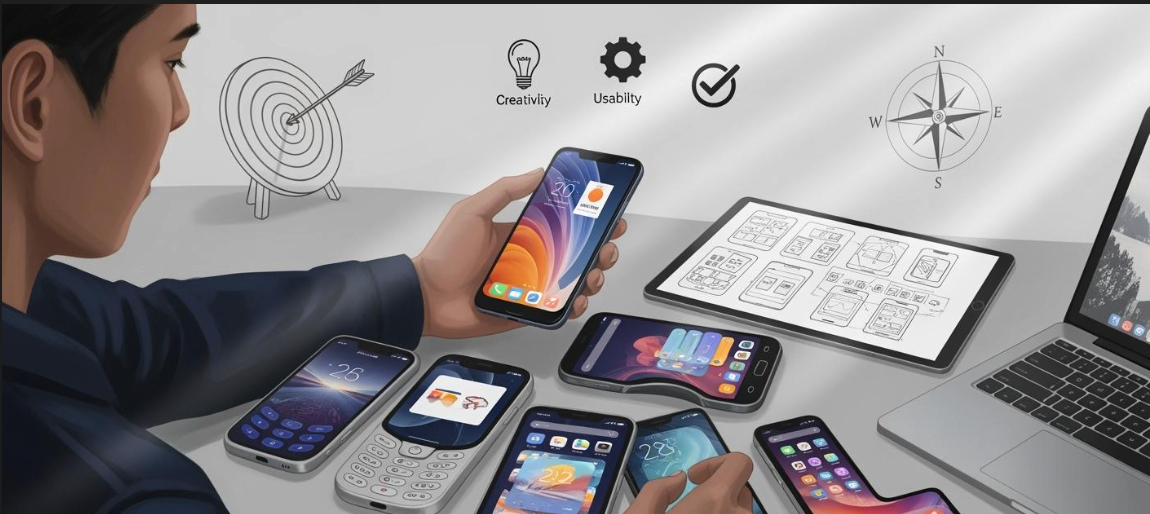
For many users in India, the phone is no longer a secondary screen. It is the main place for checking updates, reading notices, managing routine tasks, watching content, and spending short pockets of free time. That shift changed how people judge digital platforms. They are less patient with clutter, less willing to learn a confusing interface, and much more likely to leave if the first screen feels heavy or unclear. A mobile product now has to earn trust quickly. It needs to feel readable, direct, and easy to move through without friction. That applies to information portals, service pages, entertainment apps, and any platform trying to hold attention on a small screen.
This wider phone habit creates an interesting overlap between a donor focused on updates and utility and an acceptor centered on mobile play. Both depend on the same thing at a basic level – the user wants to arrive, understand the page fast, and continue without hesitation. A slow or crowded interface breaks that rhythm immediately. A cleaner one keeps the person engaged because the screen feels familiar in the best possible way. It feels practical. It feels current. Most of all, it feels built for the way people actually use phones now, which is in quick returns rather than long, patient sessions.
India’s Phone-First Routine Changed What Feels Usable
A few years ago, many digital platforms still behaved as if users would sit down and give them full attention. That no longer matches reality. Most visits now happen in motion – during a commute, in a queue, between tasks, or in those short quiet breaks that appear and disappear quickly. Because of that, users do not want extra steps. They want the screen to make sense right away. Categories should be obvious. Buttons should look natural. The next action should never feel hidden. That expectation has grown across many parts of online life, from practical update portals to entertainment-driven apps.
That is exactly where a well-structured mobile casino india platform has to meet the user. The page cannot behave like a maze. It has to feel immediate. Someone opening it on a phone wants to know where to tap, what section matters first, and how smoothly the experience will move from one screen to the next. Readers coming from a donor built around fast information and utility already understand that feeling. They are used to pages where the purpose is clear from the start. When entertainment platforms borrow that same clarity, they instantly feel more approachable.
Fast Access Builds More Confidence Than Loud Design
A common mistake in mobile entertainment is trying to impress the user before helping the user. Big banners, crowded home screens, and too many competing blocks can make a platform feel busy without making it useful. That kind of visual pressure usually works against small-screen reading. On a phone, comfort matters more than noise. The user wants a calm path forward. If every section is competing for attention at once, the screen starts feeling tiring in seconds. That is where stronger platforms separate themselves from weaker ones. They understand that confidence starts with simple movement, not with overload.
Utility Habits Influence Entertainment Habits More Than People Think
People often treat service-style websites and entertainment platforms as if they belong to separate online worlds. In practice, the habits learned in one area carry into the other. A person who regularly checks updates, records, notices, or status pages becomes used to direct layout and quick orientation. That habit does not disappear when the same person opens a mobile entertainment platform later in the day. The expectation stays the same. The screen should explain itself fast. It should not waste time. It should make the next step feel obvious without too much decoration wrapped around it.
Clean flow matters more on a small screen
This is one reason mobile-first products now get judged so quickly. The phone gives very little room for confusion. If the path feels unclear, the user notices immediately. If labels feel vague, the experience starts losing momentum. If the interface feels settled and readable, the platform earns another minute of attention. That extra minute matters because it often decides whether the visit becomes a habit or a one-time try. A donor grounded in practical phone use and an acceptor built for mobile sessions both benefit from the same lesson – smooth flow keeps people around longer than visual excess.
Short Sessions Still Need Strong Structure
A lot of digital use in India now happens in fragments. Someone checks a page for two minutes, leaves, and comes back later. That pattern does not mean weaker attention. It means digital products need to respect interrupted attention. A good mobile platform should be easy to re-enter at any point. The user should not feel lost after a short break. Menus should still feel familiar. Main sections should still be easy to reach. This matters a great deal for entertainment spaces because people often open them between completely unrelated tasks. If the platform feels hard to rejoin, it loses its place in the daily routine.
Better Mobile Platforms Fit the Day Instead of Interrupting It
The strongest mobile platforms do something simple. They fit naturally into the pace of real life. They do not ask users to slow down and learn a confusing system. They meet people where they already are – on a phone, between other things, expecting quick clarity and steady flow. That idea connects the donor and acceptor in a way that feels organic rather than forced. One speaks to practical digital habits. The other depends on those same habits to stay relevant. When a platform feels clear, direct, and easy to return to, it becomes much easier to keep in the daily mix. That is what good mobile design does now. It stops feeling like design and starts feeling normal.
